
In the 18th century, here’s how the British treated pirates: coat their bodies in tar, wrap them in chains, and publicly hang them from gallows at the harbor entrance. My guess: that wouldn’t be acceptable today. Unfortunately.
Most maritime organizations oppose arming merchant ships. While I cheered the recent events off Somalia, it does raise serious concerns in the maritime community.
Why don’t merchant ships arm themselves? I did some googling, and here’s what I learned.
- Most sailors aren’t trained to use weapons. “We’re sailors, not soldiers,” said one.
- No matter how ships arm themselves, pirates will come back with bigger guns. If you escalate, pirates will escalate more. You can end up with pirates sitting far off and bombarding the ship or raking it with machine gun fire.
- Arming ships will increase insurance costs, since insurance must now cover a range of liability and death situations.
- Most ports won’t let an armed ship dock. Period. “Trust me, you aren’t sailing into San Francisco with mercenaries carrying RPGs on board.” Since a merchant ship may dock at many different ports, carrying weapons would be a problem.
- The cost of carrying armed private security forces would probably exceed the cost of a potential ransom.
- Ships carrying chemicals or gas don’t want weapons aboard, and don’t want to provoke a firefight.
- Shipping companies would rather pay ransom than risk crew members being killed. It’s all a matter of liability costs.
- From a pirate’s standpoint: if the crew is a threat, why not just kill them?
- If you’re going to give guns to your sailors, you must provide weapons training. That would be a huge expense, and increase liability costs. (You don’t just give handguns to pilots and think an airplane is safe.)
- Do we want foreign merchant ships sailing into American ports with cannons and machine guns?
- Pirates rarely kill commercial crews on large vessels (though yacht owners are frequently killed). Their goal is ransom (whereas on yachts, it’s just thievery).
- How many sailors are willing to die to protect a rich ship owner’s profit?
- If ships carried weapons, it might make them a greater target, as pirates seek to steal the weapons, too.
- Pirates have been a problem for many, many years, and merchant lines have learned to cope with the threat.
- If a crew member smuggles a weapon into certain port and gets caught, he could spend 5-10 years in a foreign prison.
- Military vessles are considered “sovereign territory” when visiting foreign harbors, but that courtesy is not extended to civilian vessles. So any weapons possession is subject to local laws.
- Nervous sailors could accidentally shoot innocent fishermen, who often approach merchant ships offering to sell their catch.
- In an armed confrontation with pirates, the chance is great that a sailor will be injured or killed. This raises huge liability issues for ship owners.
- Bringing weapons aboard ships is “strongly discouraged” by the United Nations International Maritime Organization.
- Many ship owners are less worried about piracy than they are that sailors will kill each other in personal disputes.
- A fight with pirates can create an international incident.
Ships now use non-lethal methods such as electric fences, water hoses, and long-range sound cannons, of which one person said, “It’s the most annoying sound you’ve ever heard in your life–you literally cannot operate. It makes you nauseous.”


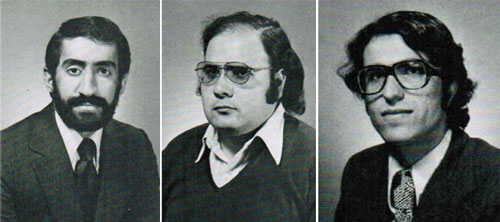
 Ramez, who graduated the same year with a Biology degree, was quiet and kept a low profile. My only real memory of him involves the freshman slave auction: he bought me, Steve Barber, and Brad Carpenter, and took us out to do yardwork at the home of Dr. Fred Morgan, a biology professor.
 Today, dweebs and lawyers run the world. I’m a marginal dweeb. Put me in Medieval society, and I’d be very ordinary. Not strong. Can’t make stuff. If the Vikings attacked my town, I’d be one of the villagers killed while running toward the forest, an arrow in my back. I’d be one of the nameless millions starved under Stalin or Mao. But as it is, because of what our current society values, I have a good place, and Google knows my name.
 This book seemed so-so right up until the last two sentences, when it blew me away.

 Queen Noor of Jordan, one of the classiest persons on the planet, came on Morning Joe after Rudy. She was asked about the same issue. Her response: it is not diplomacy to talk with aggression and confrontation. That, she said, does not work. She thought Obama’s speeches, from the inauguration on, have struck the right tone.


