
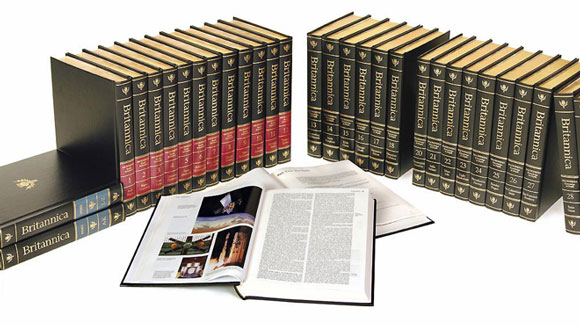
After 244 years, Encyclopedia Britannica will no longer be published in a dead-tree edition. It’s going out of print. The company will continue publishing online and will do curriculum for schools. But the 32-volume 2010 edition is the last.
That’s sad. And yet, it’s a valid business decision. The company derives 85% of its revenue from school curriculum, and about 15% from subscriptions to the web site ($70 per year). The printed encyclopedias account for less than 1% of their revenue.
Today, the internet gives us instant access to the very latest information. Why go to a hardbound volume for an entry which may be out of date? For me, even if I had a set of Britannicas on the shelf, I would still go to Google first. For several reasons.
- I can probaby get the information faster.
- I can find multiple sources for the information I want.
- I can get multiple points of view, rather than just the point of view of the encylopedia author for that entry.
- I can make sure it’s the very latest information.
But as a kid, I sure loved encyclopedias.
At home, we had a set of the Book of Knowledge. I was buried in those books all the time, especially reading about various countries of the world. Later we got a World Book set, which was always my favorite encyclopedia. Very kid-friendly. I think World Book was preferred by the working class and middle class, while Britannica was a status symbol for the upper classes.
I never much liked Britannica. In elementary school, we usually had several different sets of encyclopedias in our classroom. But I rarely consulted Britannica. It always seemed too big, too serious, and the individual volumes were much heavier than with other encyclopedias. Then, when they divided the set into the Micropaedia (12 volumes of short articles) and the Macropaedia (17 volumes of in-depth articles), they totally lost me. How was I supposed to know whether I wanted the Micropaedia or the Macropaedia? So I stuck even more closely to my favored World Book.
Back in the 1980s, a Britannica salesman came to my apartment. He made a good pitch. But when I mentioned off-hand that I grew up on World Book, he began criticizing it, pointing out entries that Britannica had but which weren’t covered in World Book. He lost me right there. He might as well have been criticizing Mom’s pumpkin pie.
I recall the names of some other encyclopedias. Compton’s. Collier’s. Americana. Funk & Wagnalls. Wonder if any of them are still in print.
As I recall my formative years, engrossed in a volume of the Book of Knowledge or World Book, I’m saddened that today’s children won’t experience the same thing. You don’t “page through” Wikipedia. And crowdsourcing, which has built Wikipedia, certainly lacks the accuracy and intellectual vigor of the big encyclopedias. But it looks like Wikipedia is the future. No more little kids, like me, pulling the S volume off the shelf and spending hours leafing through it, absorbing information. A human sponge I was.
I see that you can still buy the 2010 edition of Britannica for $1400. In 1990, Britannica sold 120,000 sets in the United States. But they printed only 12,000 copies of the 2010 edition, and have sold only 8,000 sets. The remaining 4,000 sit in a warehouse, awaiting buyers.
Britannica boasts 65,000 articles from 4000+ contributors. Wikipedia has over 350,000 full articles, and hundreds of thousands of other entries, with over 100,000 regular contributors. And Wikipedia is entirely free. Of course, many Wikipedia articles deal with silly stuff from pop culture, whereas Britannica sticks to important stuff. But still, most anything you want to know, Wikipedia can tell you. I consult it several times a week.
Crowdsourcing attracts some true experts, but it also attracts common idiots like me. I have contributed to various Wikipedia articles related to the United Brethren church (just part of my job as Communications Director). Wikipedia is generally trustworthy, but certainly not authoritative. And yet, anymore ,it’s pretty much the best we got.
Another thing: encyclopedias look great on your bookshelf. Wikipedia can’t duplicate that. And nothing ever looked more classy than a set of Britannicas.

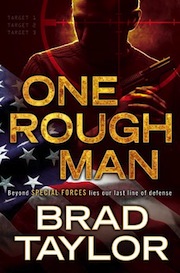 I mostly read mysteries and domestic thrillers, but sometimes I’m in the mood for an international thriller with a grand plot. You know, writers like Robert Ludlum and Clive Cussler. Books filled with action, with a hero who traipses around the world pursuing or being pursued by bad guys.
 Well, that won’t happen again. With this book, Taylor will rocket to the big time. I don’t know how Taylor compares to veteran guys like Vince Flynn and Brad Thor (with whom Taylor is typically compared), but Taylor can hold his own in this genre. He’ll do well, and will keep getting better (especially with a higher-calibre editor). Plus, with 21 years in the military, apparently much of it in Special Forces and Delta conducting classified operations, he knows the terrain.


 I don’t know how many recipes the Bible contains, but Exodus 30 gives one for sacred anointing oil.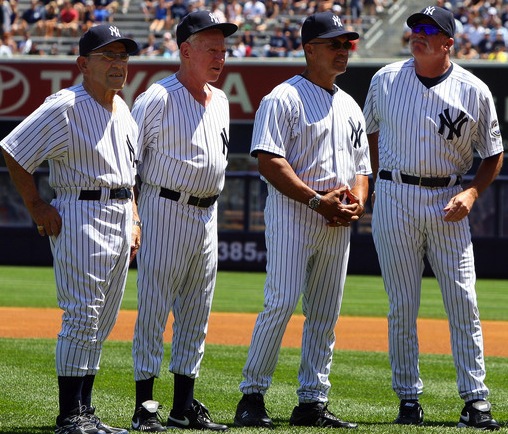
 I don’t know why Americans think we should never apologize for anything. That’s not courteous, and it’s certainly not Christian. I was always taught that it takes the bigger man to make things right. I like to think that when it comes to morality, there is no bigger man on the world stage than America. People say apologizing is a sign of weakness. No, it’s a sign of strength.
 There are things I like that Obama has done, and things I dislike. I assembled, piecemeal, a list of each over the last few months. Let’s start with the dislikes.
 Those are some of my complaints. On the positive side, I’ll cite the following. I recognize that with each one, naysayers can denigrate it by saying he doesn’t deserve the credit or it wasn’t a good thing after all, or otherwise write it off. But these are, indeed, things that have happened on Obama’s watch.


