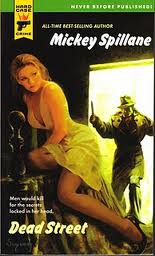
 I just read my first Mickey Spillane novel, and it’s not at all what I expected.
My image of Spillane goes back to the 1970s, when I was a teenage kid and would see risque book covers by such authors as Spillane and John D. MacDonald. Judging a book by its cover, I assumed they were tawdry, sex-filled books, and being a good preacher’s kid, that didn’t interest me. Besides, back then, all I cared about was science fiction.
But mysteries have been my primary interest for 20 years. About ten years ago I discovered the older pulp fiction and was delighted by the plots, characters, and relative lack of sexual content. Hammett, Chandler, Whittington, Goodis, Willeford–good stuff.
In 2004, a line of paperback hardboiled crime novels was launched called Hard Case Crime. Most feature covers which hark back to the golden age of pulp fiction, with beautiful women in peril, and not necessarily well-clad. The series, now up to 70-some books, features pulp fiction writers of decades past (Charles Williams, Gil Brewer, David Goodis, Brett Halliday), along with established or promising contemporary writers of the genre.
One of the first Hard Case Crime books was Stephen King’s, “The Colorado Kid.” I knew Stephen King, knew what to expect. It was a decent book (though he should stick to horror), and I decided to try other Hard Case Crime books. To this point, I’ve read 19 books in the imprint.
At Half-Priced Books, I came across “Dead Street,” by Mickey Spillane. I started reading it last night, with ingrained assumptions, and was immediately hooked. The guy can write!
The story is told first-person by Jack Stang, a retired NYPD cop. Twenty years ago, his fiance was abducted by mobsters and presumed dead. Now he discovers that she was found–blind, and with no memory–by a veterinarian who took her in and cared for her. Bettie is now living in a Florida community populated mostly by retired NYPD cops and fireman, and the vet has arranged for Stang to move into a house next to her.
So he moves to Florida, immediately encounters Bettie, and long-buried memories are triggered. Bettie knows nothing about her past relationship with Jack, or her previous life in general. But scraps keep surfacing.
Of course, mobsters had abducted Bettie for a reason, wanting something she could give–but were foiled in their efforts. If they learn that she’s still alive, they’ll come after her. And of course, they do.
In trying to track down the mystery of why Bettie was abducted, Stang makes several trips back to New York. The story gradually unravels. There’s action and killing. But there are also long passages where it’s just Jack and Bettie talking. I’m very impressed by how Spillane constructed this book.
Spillane died in 2006, with “Dead Street” mostly done. Max Allan Collins finished it, using Spillane’s extensive notes, and Hard Case Crime published “Dead Street” in 2007. It’s really a wonderful book. with practically no sexual content and minimal obscenity (for a contemporary book). I couldn’t put it down, and finished the 207 pages in half a day.
I don’t know what Spillane’s other books are like. Perhaps the Mike Hammer series, for which he’s best known, is more in line with the slutty covers of that era. But maybe not. “Dead Street” had the restraint, sexual and otherwise, of detective fiction from the 1940s and 1950s, even though it was written in recent years. I need to spot-check another Spillane book to see if it delights me as much as “Dead Street” did.

 It’s easy to recognize Ruth Rendell’s writing. The prose is elegant, and it’s restrained, with strong emotions held in check. When violence occurs, it happens in an almost incidental way, without fanfare. The violence emerges from a well-defined character, and seems totally natural. The fact that she’s a British writer completes the description.
 This is the first of the 18 “Burke” novels by Andrew Vachss. It was first published in 1980. Now, all 18 books are part of the Black Lizard imprint from Vintage Books.
 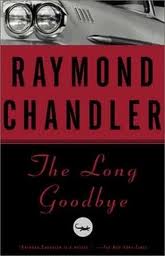 “The Long Goodbye” is among my favorite Raymond Chandler books. The 9-volume Philip Marlowe series begins in 1939 with “The Big Sleep,” and ends with 1958’s “Playback.” I’ve been reading the books in order, which means I have only “Playback” to go. Then I’m done, because Chandler died in 1959.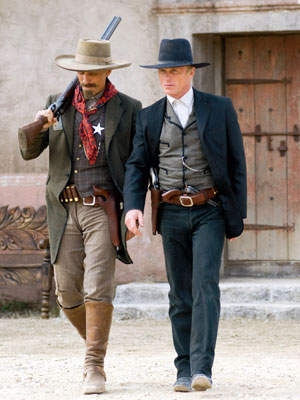
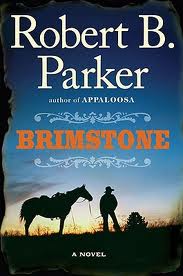 Cole and Hitch, with Allie in tow, hire on as town marshal and deputy in the fast-growing town of Brimstone. In these westerns, there is no mystery to be unraveled, as in the modern-day Parker books. Rather, everything leads to a showdown. The players are identified early, and you realize they will inevitably clash with deadly consequences.
 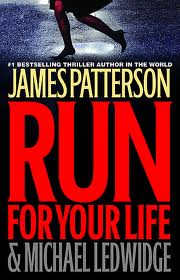 “Run for Your Life” is the second installment in the Michael Bennett series, which James Patterson launched in 2007. Michael Ledwidge, one of the many writers under the James Patterson brand, wrote “Step on a Crack” in 2007, getting the series off to a thrilling start. But “Run for Your Life,” which arrived in paperback this spring, fell flat.
 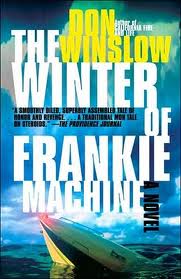 “The Winter of Frankie Machine,” by Don Winslow, is the best novel I’ve read this year. Better than “The Girl Who Played with Fire.”
 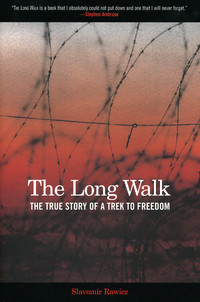 “The Long Walk” is the first-person story of Slavomir Rawicz, a Pole who is imprisoned in Siberia by the Russians, escapes, and treks thousands of miles through some of the harshest conditions on earth. It’s an amazing story of survival. The book was published in 1956, and has since been published in a couple dozen languages.
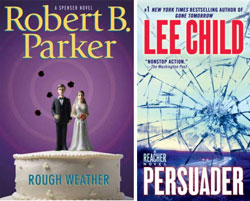 I just finished mystery/thrillers by two can’t-miss authors: Robert Parker and Lee Child.