
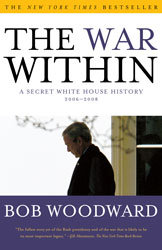
 “The War Within” is Bob Woodward’s fourth book about the inner workings of the Bush administration during wartime. He was granted a tremendous amount of access, including frequent conversations with George Bush. Bush must have deemed the previous books to be fair, since he kept the door wide open.
Woodward’s books are a first draft of history. Right now, the only histories of the Iraq war come from reporters. Down the road, historians will get involved, writing a different kind of book with a broader sweep and time’s illuminating perspective. But they will rely heavily on the basic reporting done by Woodward, Thomas Ricks, and others. If you don’t want to wait 10-15 years for such a book, read Bob Woodward.
“The War Within” is a chronological account of numerous meetings, conversations, speeches, and anything else related to the war–a huge amount of trenchwork reporting by one of the best. A lot of it seems mundane. But it’s all part of the story, all glimpses of history. You see how policy, strategy, and thinking gradually evolved; how ideas arose, and many of them fell by the wayside; and the interplay of personalities and their impact on decisions. It humanizes what happened behind government’s closed doors.
Woodward’s third book, “State of Denial,” ended with the war going badly–a bloody insurgency, the country headed toward civil war, Sunnis and Shiites slaughtering each other, and way too many American soldiers coming home in body bags. Sort of like where Thomas Ricks’s “Fiasco” ended.
As “The War Within” begins, everyone knows things are going badly. We’re losing, and nobody knows what to do. There is no strategy, hadn’t been one since the invasion, and much of the book details the search for one. We see different entities embark on studies to chart a new course–the Iraq Study Committee, the Pentagon, Condi Rice’s office, and more. It’s depressing to realize that for three years plus, we foundered aimlessly, despite all the optimistic public assurances.
We eavesdrop on countless meetings, and listen to conversations involving the President, Rumsfield, Condi Rice, Stephen Hadley, numerous military leaders, and others. (Though the presidential campaign is in full swing, Barack Obama makes only cameo appearances.) Some persons (like Rumsfield) emerge looking badly, but there are no villains–just people with different opinions and perspectives, all desperately wanting us to succeed in Iraq.
Overall, George Bush looks pretty good. He’s decisive, he pulls in information from various sources, he trusts his generals, and he shows what I felt was good wisdom in many situations. He doesn’t seem very engaged intellectually with anything involving nuance, but the war has his attention. His legendary pride in making decisions from his “gut” is disconcerting (something Woodward skewers in the final few pages). Bush constantly talks about “winning,” but can’t define what it means to win. He keeps asking for, and publicizing, Vietnam-era stats–body counts, raids, persons detained, etc.–which others know are meaningless in an insurgency; he never gets beyond that mentality. But overall, my view of Bush improved.
An influential, domineering figure is retired general Jack Keane, a straight talker. In separate meetings, he reams out Rumsfield, Peter Pace (Joint Chiefs chairman), and General George Casey (Iraq theatre commander), telling them exactly where their leadership is lacking. He outlines what needs to be done (counter-insurgency strategies), and who should lead it (David Petraus).
The idea of a surge in troops arises–a “gamble,” as it is repeatedly described (thus the title of Thomas Ricks’s book, “The Gamble”). The surge is discussed for about a year (and Obama was criticized for taking 2 months to develop a new strategy for Afghanistan?). But though they agree that more troops need to be sent, they don”t know what those troops will do. The two principle generals in charge of the war, Casey and John Abizaid (head of the regional Central Command), don’t request or want additional troops. In fact, both want to reduce troops. Abizaid’s view is that the only way to win was to get out.
There’s a surreal meeting between Casey and Abizaid where they say, “It looks like the President is going to send us thousands of additional troops. We need to decide what to do with them.” Casey, in particular, considers it backtracking–that the additional troops will take back jobs they’d been turning over to Iraqis.
A continuing complaint, voiced by many, is that we never had enough troops in Iraq to do the job. And yet, the surge is strongly opposed by various military entities, who argue that our total military is stretched way too thin, and that surge troops will remove our “strategic reserve,” the troops available to respond to another crisis should one arise. There is constant criticism that our troops are over-extended with lengthy tours.
Condi Rice also opposes the surge, repeatedly asking, “What will their mission be?” And nobody really has an answer. She fears that we’ll send an extra 30,000 troops, who will do the same things already being done, and with the same results.
However, the real difference is not so much the additional troops as the change in leadership–David Petraus–and the pursuit of an actual strategy. By the summer of 2008, violence is down substantially.
After Petraus takes over, a variety of problems arise politically. The Democrats seize control of the House, and Nancy Pelosi injects her ignorant self into the fray, insisting that we begin withdrawing troops right away. Plus, Petraus’s military higher-ups prove unsupportive. Bush and Cheney step in big-time to undergird Petraus. Good for them.
It’s a fascinating book. Woodward always gets information nobody else has. Now I’ll need to go back and read his other books, not to mention his first book about the Obama presidency due this fall.

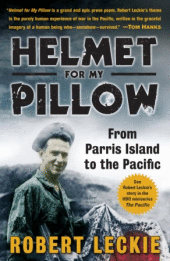 I’ve been reading World War 2 books since fifth grade, when I read William Shirer’s “The Rise and Fall of Adolf Hitler,” a book that, truthfully, was lost on me at that age.
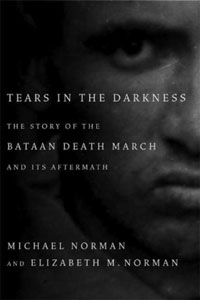 I remember reading a book about the Bataan Death March back in high school. I was astounded by the cruelty of the Japanese. But “Tears in the Darkness: The Story of the Bataan Death March and Its Aftermath,” published in 2009, takes the horror much further. The Japanese committed terrible atrocities in the Philippines, and that underscores our benevolence as conquerors in rebuilding Japan. We are good people. The Japanese, back then, were decidedly not.
 I previously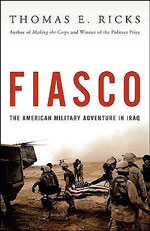
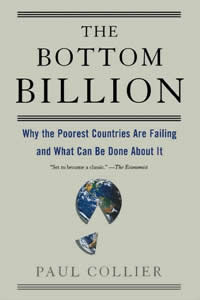 “The Bottom Billion” is a fascinating study of the poorest countries in the world. Paul Collier, a former official with the World Bank, is one of the world’s leading experts on African economies. He has worked with, and studied, the dynamics that keep a country down.
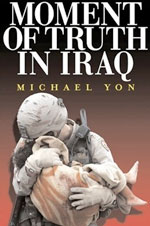
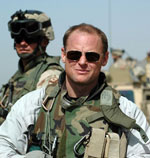 Yon (left) superbly pictures the principles of counter-insurgency in action. You really need to see these principles lived out to appreciate them. Thomas Ricks talks about counter-insurgency theory in “Fiasco,” which ends just as David Petraus is taking over, and he describes a couple major success stories–one in 2003 when Petraus commanded the 101st Airborne in Mosul, and then later in Tal Afar (both of which were basically rogue operations by individual commanders who “got it”). But counter-insurgency principles permeate Yon’s book, and you can’t help but realize, “We should have been doing this all along.” Yon, as a Green Beret, was trained in these principles, so he understands what he’s looking at.
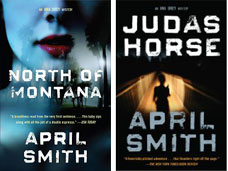 I just finished two books by April Smith, a new author to me. “North of Montana” and “Judas Horse” are two Black Lizard/Vintage Crime mysteries featuring Ana Grey, an FBI investigator. The books were written 15 years apart–1994 and 2008–which is a bit odd. But I went right from one to the other and didn’t feel like I had missed much in Ana’s life.
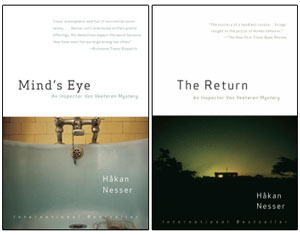 During the last week I read two books by Swedish writer Hakan Nesser. Here is yet another very good Swedish mystery writer.


