
In 1995, a heat wave killed 739 people in Chicago in just one week. No doubt the current heat wave is causing hundreds of deaths in Chicago once again, especially among the elderly, sick, and poor.
By 2100, forecasts show, Chicago could face 30 days a year when the temperature exceeds 100, compared to 3 days now. They’ll have 70 days a year when it’s over 90, compared to 12-15 now. Obviously, there are zillions of variables. But it’s definitely gonna be a whole lot hotter. A 2-degree rise in temperature, from 1900, is pretty much locked in; it’ll probably go higher. Lots of variables, but a good thing for responsible politicians (an oxymoron?) to anticipate.
Fortunately, Chicago has a very aggressive plan for dealing with climate change—a model for the rest of the country. They don’t anticipate any big water problems—not sitting next to Lake Michigan—but they are concerned about severe heat.
Two things Chicago is doing: planting more trees, and shifting to windpower for electricity. The book “Hot: Living Through the Next 50 Years on Earth,” by Mark Hertsgaard, tells about it.
One very simple idea came as a result of three maps:
- A heat map showed parts of the city where temperatures were higher than elsewhere. It revealed “heat islands” throughout the city.
- A second map charted tree foliage. Overlaying the maps showed that temperatures were higher in areas with fewer trees.
- Then they overlaid a third map, this one showing income levels. It showed that the hot, low-foliage areas were especially prevalent in low-income areas.
So, they are intentionally targeting those hotspots for tree-planting, including planting trees in vacant lots. In the future, this additional tree cover will bring down temperatures throughout the city…and contribute toward saving lives. A simple bit of intentionality. New York City is doing the same thing.
Chicago also wants to become America’s capital of wind power. Eight of the world’s leading manufacturers base their North American operations in Chicago. The Midwest is the Saudi Arabia of wind power. Huge wind turbines are difficult to transport—so why not build them near where they will be installed? That’s the idea.
Chicago is doing many other things to deal with climate change, and their example is spreading to other cities. Very interesting, and encouraging, to read about.

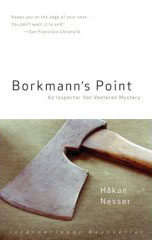 “Borkman’s Point,” by Hakan Nesser, was written in 1993 but not published in English until 2006. It’s part of a series starring Chief Inspector Van Veeteren, whose popularity in Sweden rivals fellow fictional sleuths Kurt Wallander and Martin Beck. So far, five Van Veeteren books have appeared in English, the latest in 2010 (though it was originally written in 1997), and a sixth (written in 1998) is due later this year.
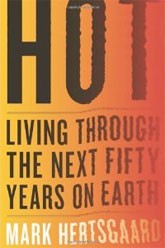 With a merciless heat wave in effect, I’m reminded of a superb book I read earlier in the year, “Hot: Living Through the Next 50 Years on Earth,” by Mark Hertsgaard. It’s the best book I’ve read so far this year.
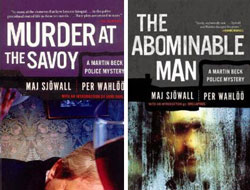 Murder at the Savoy is the sixth book (of 10 total) in the Martin Beck series, by Swedes Maj Sjowal and Per Wahloo. The series has ten books in all, written from 1965-1975. While Martin Beck is the main character, he’s not a dominant lead; most of the books scatter the story among an ensemble cast.
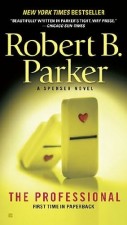 “The Professional,” from October 2009, is Robert Parker’s 37th novel in the Spenser series. Number 38, “Painted Ladies,” came out in 2010, and Number 39, “Sixkill,” appeared in May 2011. And that’s it. Robert Parker died in January 2010, but had books at the publisher and fresh off his typewriter. But the well is running dry.
 Last Wednesday I heard Annie Jacobsen talk about her book, “Area 51: An Uncensored History of America’s Top Secret Military Base,” with Jon Stewart on the Daily Show. Then, the next morning, I heard her on Morning Jo’. I was intrigued. I downloaded a 30-page sample onto my Nook, was hooked, and then bought and downloaded the entire book. Four days later, and just six days after the book was released, I’m finished.
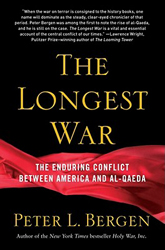 I loved this book. I’ve read a number of books about the Afghanistan and Iraq wars, and most have been very good. “The Longest War: The Enduring Conflict Between America and Al-Qaeda,” published in January 2011, represents extensive reporting of the whole history of Al Qaeda and Osama bin Laden. Bergen, a TV and print journalist, was the CNN producer who arranged bin Laden’s first interview with the Western press back 1997. He’s been working the story ever since.
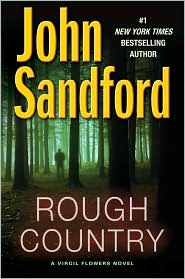 “Rough Country” (2009) is the third book starring Virgil Flowers, a series John Sandford started in 2008. Sandford is best known for the Lucas Davenport “Prey” series (each title includes the word “prey”). He started that series in 1989, and has now pumped out 21 “Prey” books. But the Virgil Flowers books are better. Or, at least, Flowers is a much more interesting character than Davenport (for whom Flowers works, out of Minneapolis).
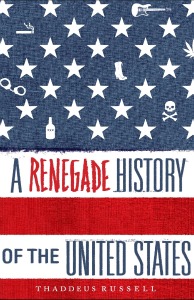 I previously reviewed the book “A Renegade History of the United States,” by Thaddeus Russell, who teaches history and American studies at Occidental College. It gives an alternative, sometimes politically-incorrect, view of our history.


